Course Overview
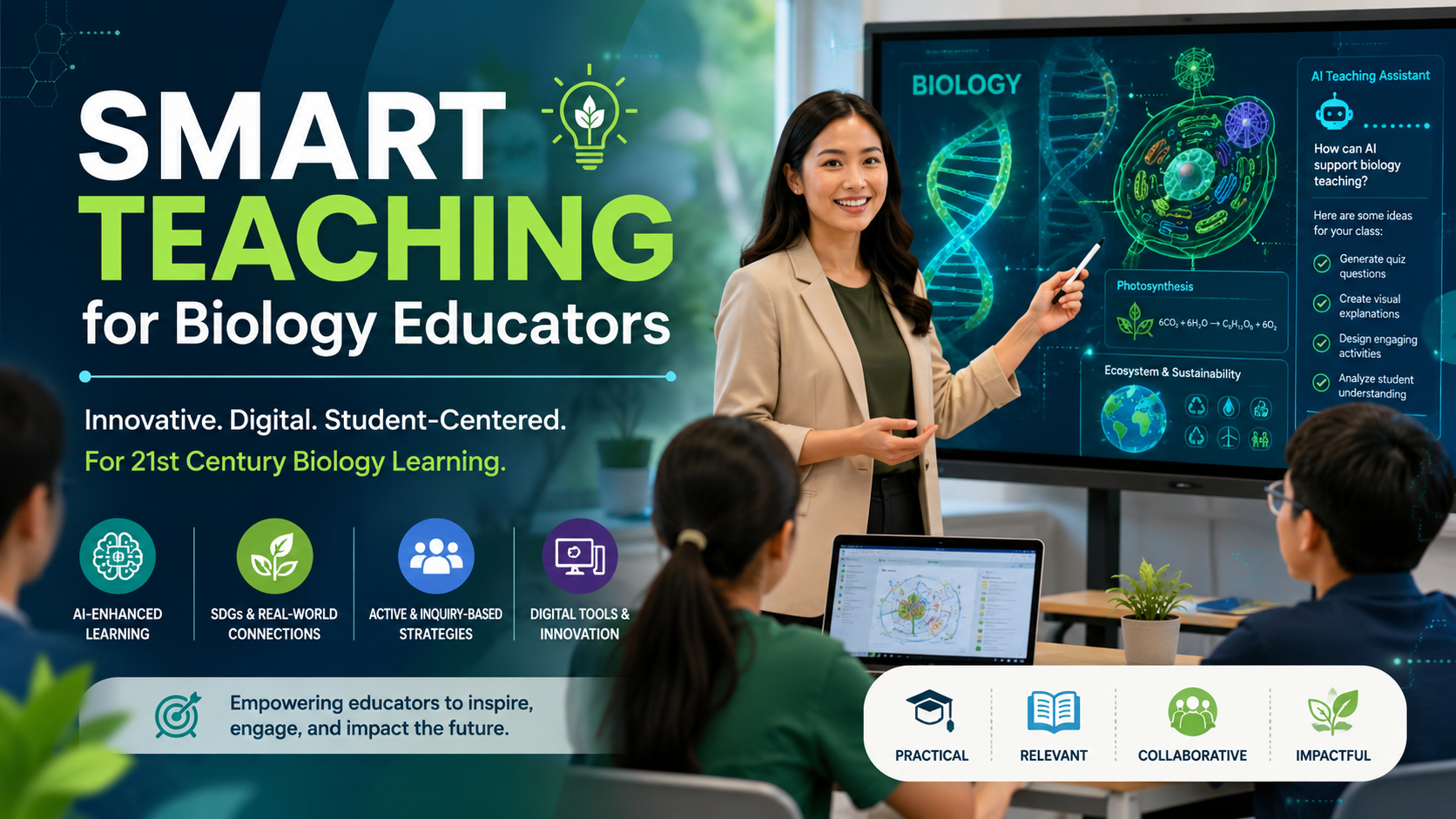
Smart Teaching for Biology Educators is a practical short course designed to support biology teachers, lecturers, pre-service teachers, and science educators in designing active, engaging, and technology-supported biology learning. The course introduces simple and applicable strategies for improving biology instruction through active learning, digital tools, AI-supported teaching ideas, formative assessment, and reflective teaching practices.
Biology learning often involves abstract concepts, complex processes, and diverse learner needs. Therefore, educators need practical approaches that can help students understand biological concepts more meaningfully. This course provides step-by-step guidance, examples, and templates to help participants create learning activities that are contextual, interactive, and easy to implement in face-to-face, blended, or online learning environments.
Throughout the course, participants will explore the concept of smart teaching, design active learning activities for biology topics, use simple digital tools and AI ethically, develop formative assessments, and create a mini Smart Biology Teaching Plan. The assignments are designed to be simple, practical, and directly applicable to participants’ own teaching contexts.
By the end of this course, participants are expected to produce a mini teaching plan that integrates active learning, digital-supported instruction, and simple assessment strategies for biology education.
What You Will Learn
In this course, participants will learn how to:
- Understand the concept of smart teaching in biology education.
- Identify common challenges in teaching biology and propose simple instructional solutions.
- Design active learning activities for selected biology topics.
- Use digital tools and AI-supported strategies ethically and effectively.
- Develop simple formative assessments and feedback strategies.
- Create a mini Smart Biology Teaching Plan for classroom, blended, or online learning.
Course Objectives
After completing this course, participants will be able to:
- Explain the principles of smart teaching in the context of biology education.
- Select appropriate active learning strategies for biology topics.
- Design simple digital-supported learning activities.
- Develop formative assessment tasks to monitor student understanding.
- Apply ethical considerations in using AI and digital tools for teaching.
- Produce a practical mini teaching plan for biology learning.
Prerequisites
There are no formal prerequisites for this course. The course is open to biology teachers, university lecturers, pre-service biology teachers, science educators, teaching assistants, and anyone interested in enhancing biology teaching through innovative and technology-supported approaches.
Syllabus
This course consists of four instructional modules followed by one final project. Each module combines instructional videos, reading materials, practical learning activities, quizzes, and reflection tasks to help participants progressively develop competencies in designing active, engaging, and technology-supported biology learning.
Module | Topics | Learning Activities | Assessment |
|---|---|---|---|
| Module 1 Understanding Smart Teaching in Biology Education | Definition of Smart Teaching; Characteristics of Biology Learning; Challenges in Biology Teaching; Principles of Smart Teaching | Watch instructional videos; Read learning materials; Complete reflection activities | Reflection Activities; Module Quiz |
| Module 2 Designing Active Learning Activities for Biology Topics | Active Learning Strategies; Think–Pair–Share; Concept Mapping; Inquiry-Based Learning; Problem-Based Learning | Watch instructional videos; Analyze examples; Complete a mini design task | Mini Assignment; Module Quiz |
| Module 3 Using Digital Tools and AI to Support Biology Learning | Digital Learning Tools; AI-Supported Teaching Strategies; Creating Learning Resources; Ethical Use of Artificial Intelligence | Guided practice; Create quizzes and discussion prompts; Technology exploration activities | Mini Assignment; Module Quiz |
| Module 4 Simple Assessment and Feedback for Biology Learning | Formative Assessment; Assessment Techniques; Rubric Development; Providing Effective Feedback | Reading activities; Assessment design task; Reflection activities | Mini Assignment; Module Quiz |
| Final Project Smart Biology Teaching Plan | Develop a Smart Biology Teaching Plan integrating active learning, digital tools, formative assessment, and reflective teaching strategies | Independent project development | Final Project Submission |
Learning Methods
This course uses flexible and practical learning methods, including:
- Short instructional videos
- Reading materials
- Downloadable templates
- Short quizzes
- Reflection activities
- Mini assignments
- Final project
The course is designed to be beginner-friendly and does not require advanced technological skills.
Assessment
Participants will be assessed through quizzes, reflection tasks, mini assignments, and a final project.
| Assessment Component | Weight |
|---|---|
| Module Quizzes | 30% |
| Reflection Activities | 20% |
| Mini Assignments | 30% |
| Final Project | 20% |
| Total | 100% |
Expected Final Output
At the end of the course, participants will produce a Smart Biology Teaching Plan, a practical mini lesson design that can be adapted for biology teaching in school, university, blended learning, or online learning contexts.
Target Participants
This course is suitable for:
- Biology teachers
- Biology lecturers
- Pre-service biology teachers
- Science educators
- Teaching assistants or tutors
- Educators interested in active learning, digital tools, and AI-supported teaching
Estimated Workload
The estimated workload for this course is approximately 8–10 hours, including watching videos, reading materials, completing quizzes, working on mini assignments, and preparing the final project.
Course Staff
Course Instructor
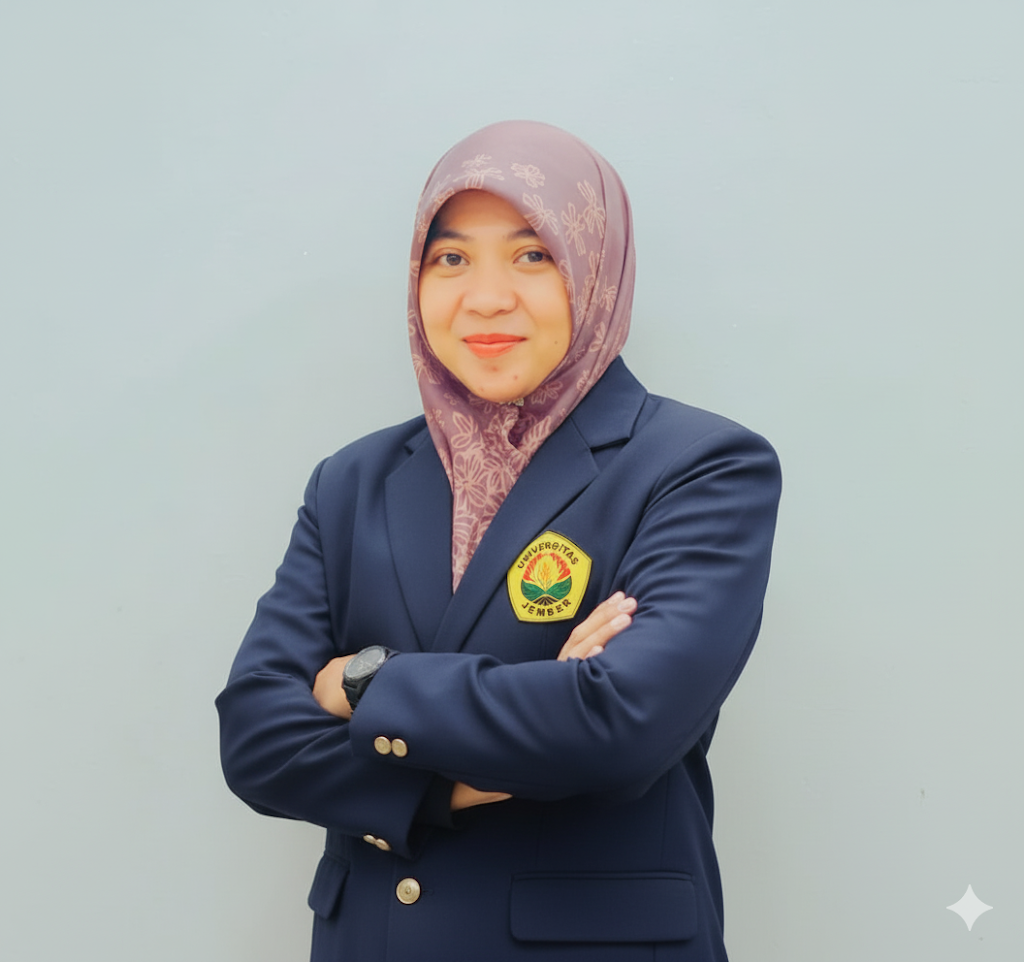
Dr. Bea Hana Siswati, M.Pd.
Universitas Jember, Indonesia
Head of Microteaching Laboratory, Faculty of Education, Universitas Jember
Email: [email protected]
Dr. Bea Hana Siswati is a biology education lecturer and academic at Universitas Jember. Her work focuses on biology education, teaching and learning innovation, microteaching, teacher education, learning assessment, and the development of instructional strategies for prospective teachers and educators. In this course, she guides participants in understanding and applying smart teaching principles to design active, contextual, and technology-supported biology learning.
Role in the course:
- Lead course instructor
- Developer of course materials
- Facilitator of learning activities
- Designer of assessment and final project guidelines